

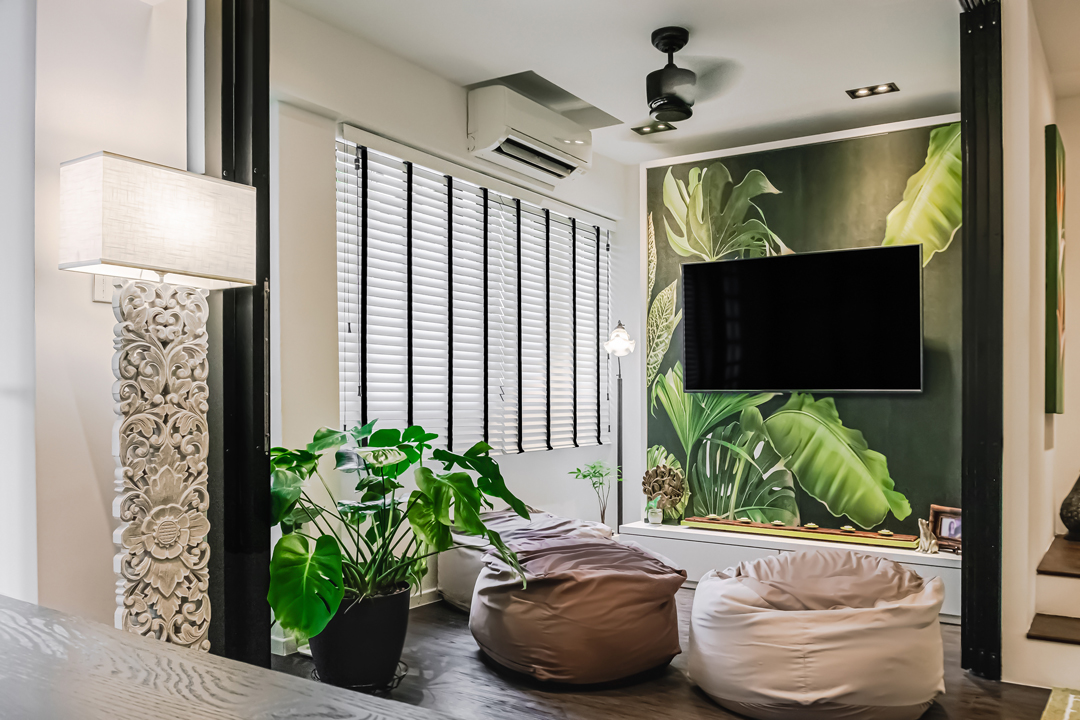
You choose a blackout fabric, lower the blind completely, and still notice a narrow line of light around the window. Does that mean something is wrong with the blind?
Not necessarily.
The amount of light a blind blocks depends on more than the opacity of its fabric. Blinds have moving components that need space to roll, fold, tilt or glide. Some use one continuous piece of fabric, while others rely on overlapping slats, sheer layers or individual vanes. Wide windows may also require more than one blind, creating small gaps between individual systems.
These are normal characteristics of different blind designs rather than automatically signs of poor installation. More importantly, not every blind is intended to create the darkest possible room. Some are designed to give homeowners greater control over daylight, views and privacy instead.
Understanding where these gaps come from can help you choose a blind based on how you actually intend to use the room.

Blackout Fabric Does Not Mean Every Gap Around the Blind Disappears
When a blind uses blackout fabric, the term generally describes the material itself. The fabric is designed to greatly reduce or prevent light from passing directly through it.
However, light can still travel around the fabric.
A roller blind needs clearance beside its fabric. A Roman blind needs room to fold smoothly. Venetian slats need space to tilt. Combi fabrics need to pass over one another. Even a highly opaque blind can therefore have small areas where light enters because of the way the system operates.
For an everyday bedroom, those gaps may be perfectly acceptable. For a shift worker or someone particularly sensitive to light, they may be much more noticeable.
The better question is therefore not simply, “Is this a blackout fabric?” but also, “Where can light still enter when this blind is closed?”
Where Can Light Enter Different Blind Systems?
| Blind System | Where Light May Remain | Why |
|---|---|---|
| Roller & Roman Blinds | Along the sides | Fabric needs clearance to roll or fold smoothly |
| Venetian Blinds | Between the slats | Individual slats overlap and tilt for adjustable light control |
| Combi Blinds | Between fabric layers and along the sides | Sheer and opaque bands move past one another |
| Sheer Shades, Silhouette® & Pirouette® | Between vanes and sheer layers | Designed to diffuse and control daylight rather than seal it out |
| Duette® Honeycomb Blinds | Around the perimeter | Some clearance may remain depending on the installation; channels can improve coverage |
| Multiple Blind Panels | Between adjoining blinds | Wide windows may exceed the maximum width of a single blind |
| Vertical Blinds, Smart Curtains & Luminette® | Between vertical vanes | Individual vanes rotate and overlap to control light and privacy |
| Ziptrak® Interior Track-Guided Blinds | Minimal bottom clearance | Fabric edges are retained within tracks to reduce perimeter gaps |
Side Gaps: Roller Blinds and Roman Blinds
One of the most common places for light to appear is along the sides of a blind.
Roller Blinds
A conventional Roller Blind uses a single sheet of fabric attached to a roller tube. The fabric is normally narrower than the complete mechanism because the brackets and operating components take up space on either side.
This leaves a small amount of clearance between the fabric and the surrounding wall or window frame.
The mounting method also makes a difference. An inside-mounted Roller Blind fits neatly within a window recess, although the side gaps may be more apparent because sunlight can pass around the edges. An outside-mounted blind can overlap the window opening and reduce these visible gaps, provided there is enough surrounding wall space.
For many homeowners, this is a practical balance. Roller Blinds remain a simple, neat and versatile choice for bedrooms, living rooms and studies, with different fabrics available depending on whether the priority is filtered daylight, privacy or stronger room darkening.
Roman Blinds
Roman Blinds have a softer appearance because they can be made using curtain fabrics, but they also require some operating clearance.
Instead of rolling around a tube, the fabric folds into horizontal pleats as the blind rises. Space around the sides helps these folds move without rubbing against the window frame.
As with Roller Blinds, installing the blind outside the window recess may provide additional overlap where the surrounding space allows it.
The advantage of a Roman Blind is therefore not that it eliminates every light gap. It is the ability to combine the warmth and texture of curtain fabric with the compact operation of a blind.
Can Side Channels Reduce the Gaps?
Some blind systems can be fitted with side channels to cover more of the clearance beside the fabric.
This can improve room darkening because the direct opening between the blind and window frame is reduced. However, a conventional U-shaped channel usually still needs sufficient internal space for the fabric or bottom bar to move smoothly, so a small amount of light may remain within the channel depending on its design.
Air movement is another consideration. If windows are regularly left open, wind and pressure changes from opening or closing doors can cause loosely guided fabric to move. With certain systems, excessive movement may cause the blind to shift within or away from its guide.
Side channels can therefore be useful, but homeowners should look at how the fabric is actually retained within the system, not simply whether channels are present.
Light Between Slats, Vanes and Overlapping Fabrics
Venetian Blinds
Venetian Blinds use horizontal slats that tilt to adjust sunlight, privacy and views. When closed, the slats overlap and substantially reduce incoming light, although fine lines of light may remain between them or around the ladder cords.
That flexibility is also their main strength. Instead of choosing only between fully open and fully closed, you can angle the slats to redirect strong sunlight while keeping some natural daylight in the room.
Combi Blinds
Combi Blinds, also commonly called Korean, Zebra or Rainbow Blinds, use alternating sheer and opaque bands across two layers of fabric.
Moving the layers changes how much the sheer and opaque sections overlap. This allows homeowners to soften glare and adjust privacy without raising the entire blind.
Because the system works through overlapping fabrics, some light can naturally remain between the layers even when they are positioned for greater privacy. For living and dining areas, that ability to retain a brighter atmosphere can be exactly why the system is chosen.
Sheer Shades, Silhouette® and Pirouette®
Sheer-based systems are also intentionally designed around the interaction between fabric and natural daylight.
Sheer Shades use fabric vanes together with sheer layers to soften direct sunlight. Hunter Douglas Silhouette® Window Shadings use adjustable vanes suspended between sheer fabrics, while Pirouette® Window Shadings use sculpted fabric vanes that open to reveal a sheer backing.
These products are not primarily designed to create a sealed blackout surface. Their appeal lies in transforming stronger sunlight into softer, more comfortable daylight while giving homeowners greater control over privacy.
If a living room feels harsh and glaring in the afternoon, this type of light management may actually be more useful than simply blocking all incoming light.
Why Wide Windows Can Create Gaps Between Individual Blinds
Another source of light gaps has less to do with the fabric and more to do with the width of the window.
Unlike curtains, which can often span broad openings using large fabric panels, many horizontal blind systems have maximum recommended widths. As a blind becomes wider, the fabric gets heavier and greater loads are placed on the roller tube, headrail, lifting system or motor.
A very wide opening may therefore need to be divided into two or more individual blinds to maintain reliable operation.
The trade-off is that each blind requires its own mechanism and operating clearance. A narrow vertical gap may consequently appear where two neighbouring blinds meet.
This is worth discussing early for large condominium windows and full-height glazing. Even when every blind uses blackout fabric, the joins between individual systems may remain visible in a darkened room.
Which Blinds Work Differently on Wide Windows?
If treating a very broad opening as continuously as possible is important, systems that operate vertically or traverse sideways can offer another approach.
Vertical Blinds, Smart Curtains and Luminette®: Similar Look, Different Designs
Vertical Blinds, Smart Curtains and Luminette® Privacy Sheers are all commonly used for wide windows and sliding doors, so they can look similar at first glance. The main difference is how their fabric is constructed and how each system controls light.
Vertical Blinds use individual flat fabric vanes that rotate to adjust privacy and daylight. The vanes typically overlap when closed and are connected near the bottom to help keep them aligned. Because they are separate moving pieces, small amounts of light may naturally appear between them depending on their angle.
Smart Curtains have a softer, more curtain-like appearance. Each individual vane combines opaque and sheer sections, allowing you to rotate the fabric to adjust how much light enters. The vanes are separated at the bottom, so you can also walk through them without opening the entire furnishing, making them particularly convenient for balcony doors and frequently used openings.
Luminette® Privacy Sheers have a more continuous appearance because the vertical vanes are integrated within sheer fabric rather than hanging as completely separate pieces. The vanes rotate for privacy while daylight filters softly through the sheer sections, creating a more diffused effect across the window.
All three are useful for larger openings, but they manage light differently. Vertical Blinds provide straightforward adjustable control, Smart Curtains add walk-through convenience, while Luminette® creates a softer and more continuous sheer finish.
For homeowners whose main priority is complete darkness, it is worth remembering that these systems are designed primarily around flexible daylight, privacy and wide-window coverage rather than eliminating every trace of light.
What About Honeycomb Blinds?
Honeycomb Blinds, also known as cellular shades, use a pleated cellular structure rather than a conventional flat sheet of fabric.
When blackout fabric is selected, the material itself can provide strong room darkening. The cellular construction also traps air within the blind, which can help improve comfort around windows that receive significant heat.
As with most conventional blinds, some perimeter clearance may remain depending on how the shade is fitted. For homeowners who want stronger edge coverage, certain Honeycomb systems can be paired with additional surrounding channels or frames.
The consideration then becomes visual as well as functional: a more substantial perimeter frame may provide greater coverage but will also be more visible around the window.
Track-Guided Blinds Reduce Side Clearance Differently
A track-guided system approaches the side-gap issue differently from a conventional free-hanging blind or blind sitting loosely within a wider U-channel.
With Ziptrak® Interior, the fabric edges are retained within slim side tracks as the blind moves. This helps minimise the open side gaps typically associated with conventional Roller Blinds and makes the system particularly suitable for rooms where stronger room darkening is important.
This could include bedrooms used by light-sensitive sleepers, nurseries, gaming rooms or media spaces.
The trade-off is that a track-guided system requires appropriate space around the window and accurate measurement of factors such as window handles, grilles and surrounding structures.
It is not necessary for every room. A homeowner who mainly wants glare control in the living room may benefit more from an adjustable blind, while someone who wants to minimise light gaps in the bedroom may prioritise a retained track-guided system.
A Light Gap Is Not Automatically an Installation Problem
Seeing light around a blind does not necessarily mean it has been measured incorrectly.
Some gaps exist because the product requires them to function properly. Roller Blind fabric cannot rub continuously against its brackets. Venetian slats must remain free to tilt. Combi fabric layers need to slide past one another, while individual Smart Curtain or Luminette® vanes need space to rotate and move.
Professional measurement should minimise unnecessary gaps, but it cannot remove the functional characteristics of the system itself. Understanding those characteristics before ordering is more useful than expecting every blind to behave like a sealed surface.
Different Rooms Need Different Types of Light Control
There is also no reason every room in the home needs the darkest possible blind. A study room may benefit from Venetian Blinds because the slats can redirect glare away from a computer screen. Combi Blinds, Sheer Shades, Silhouette® or Pirouette® can work well where homeowners want natural light without harsh glare.
Honeycomb Blinds may appeal more to homeowners concerned about heat and indoor comfort. Vertical Blinds, Smart Curtains and Luminette® are useful options for large openings where access and width need to be considered.
For bedrooms where stronger room darkening is the priority, blackout Roller or Roman Blinds may be sufficient for many homeowners, while side-channel or track-guided systems can be considered when reducing edge gaps is especially important.
The right blind is therefore not necessarily the one that blocks the most light. It is the one whose way of controlling light matches how the room is used.
What Should You Ask Before Choosing Your Blinds?
Instead of looking only at fabric samples, ask how the complete blind will behave once installed.
Find out where the normal operating gaps will be, whether your window requires one or several blind panels, whether the product uses slats or overlapping fabric, and whether the mounting position can improve coverage. If stronger room darkening is important, ask whether side channels or a track-guided system would be more suitable for your particular window.
These details are much easier to understand when you can see the blind operating rather than judging it from a photograph.

See How Different Blind Systems Control Light
At The Curtain Boutique, our Design Consultants can demonstrate the different blind systems and explain how each design affects daylight, glare, privacy and room darkening.
Rather than choosing a blind based only on whether a fabric is labelled “blackout”, you can compare how Roller Blinds, Roman Blinds, Venetian Blinds, Combi Blinds, Vertical Blinds, Sheer Shades, Honeycomb Blinds, Smart Curtains, Hunter Douglas window shadings and Ziptrak® Interior actually work.
Visit our showroom to experience the different systems in person, or book a personalised consultation based on your windows, room usage and preferred level of light control.
The Curtain Boutique Showroom Gallery:
📍 33 Ubi Ave 3, Vertex, #01-01, Singapore 408868
📞 +65 6904 8813