

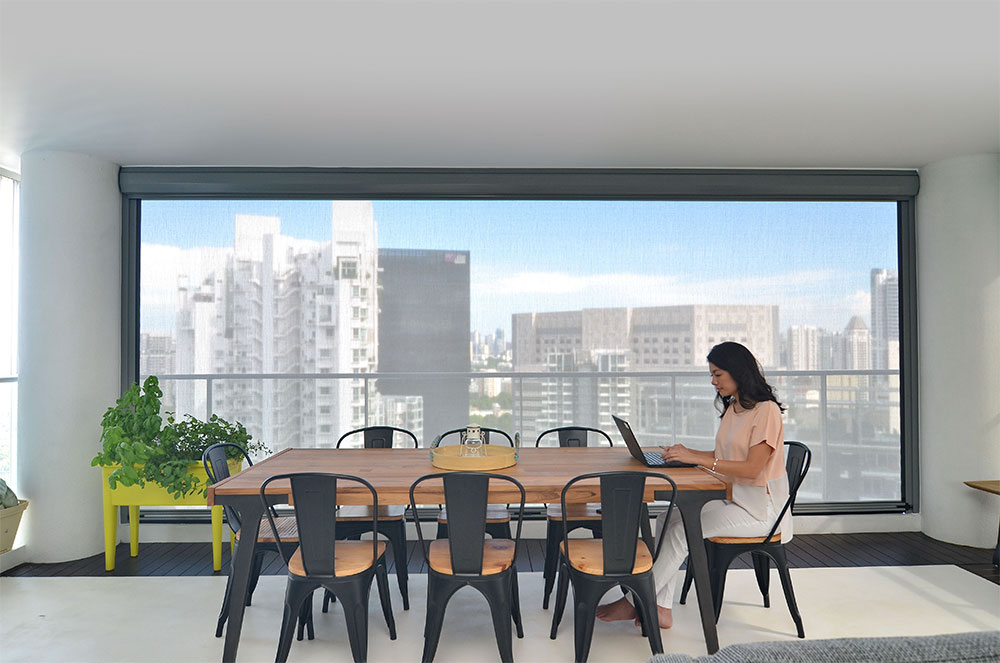
Thinking about installing zip blinds on your balcony in Singapore? Before you choose a fabric or book a consultation, there’s one question that trips up more homeowners than any other: am I actually allowed to do this, and do I need approval first?
The short answer is yes, zip blinds are permitted in most Singapore homes, but the rules differ depending on whether you live in an HDB flat, a condominium, or a landed property. Getting the process wrong can mean having to remove a perfectly good installation at your own cost.
This guide walks you through exactly what applies to your situation, step by step.
The key rule that governs all balcony blinds in Singapore
Before looking at HDB or condo-specific rules, there is one overarching regulation principle from the Urban Redevelopment Authority (URA) that applies to everyone:
You cannot permanently enclose your balcony.
Under URA guidelines, the important distinction is between retractable screening and permanent enclosure. Fixed glass enclosures, solid walls, and panels that seal the balcony entirely are not the safe route because they can change the balcony from a semi-outdoor space into an enclosed area.
Zip blinds, however, are retractable. Because they can be fully opened, they are generally treated more favourably than fixed enclosures. The practical rule of thumb is: if a blind can be fully opened and retracted, it is more likely to be acceptable; if it creates a permanent sealed room, it is not.
The practical rule of thumb: if a blind can be fully opened and retracted, it is generally permitted. If it is fixed or creates a permanent sealed room, it is not.
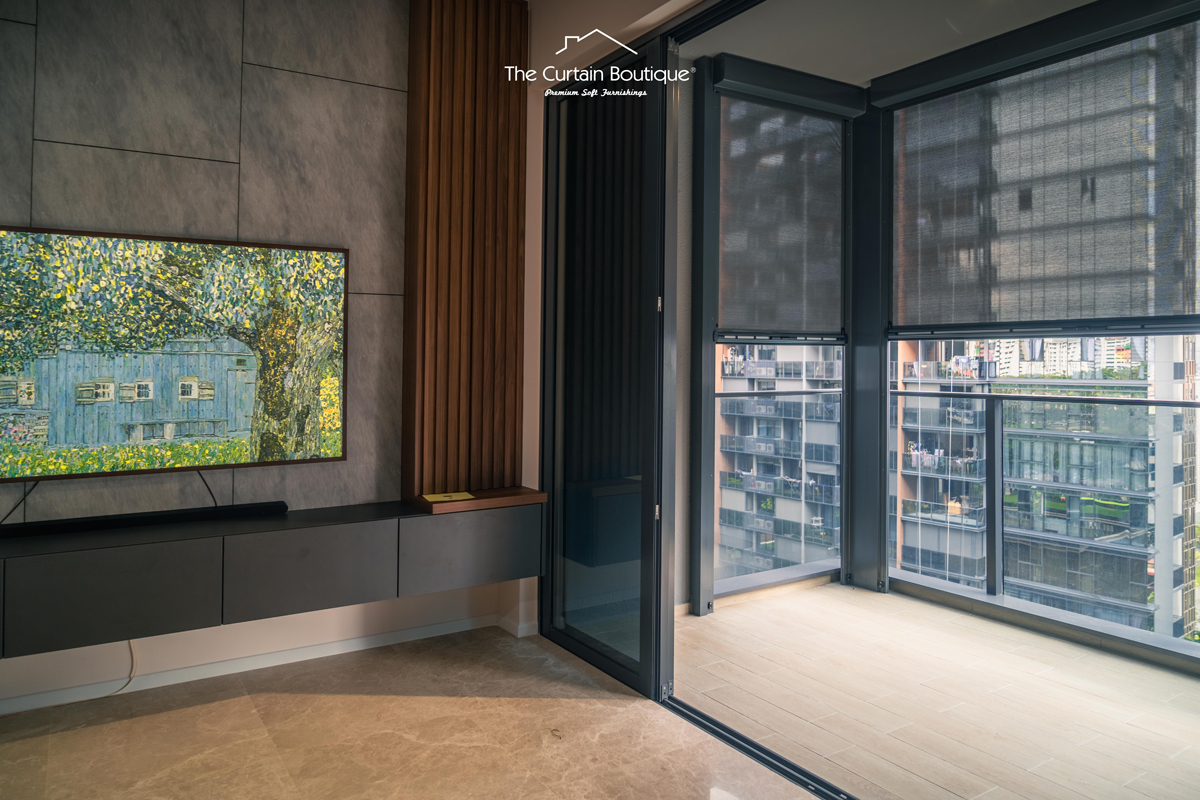
Condominiums: MCST approval workflow
Condominiums add a layer of complexity because each development is governed by its own Management Corporation Strata Title (MCST), which sets its own by-laws in addition to URA and BCA requirements.
Step 1 : Check your condo’s house rules before anything else
Before contacting any blind supplier, obtain a copy of your condo’s house rules or by-laws from your Managing Agent (MA). Specifically look for:
- Whether prior approval is required for balcony installations
- Approved colours or materials for external-facing blinds
- Whether a standardised look is required across units (some condos specify this)
- Any restrictions on motorised systems
Some condos require balcony blinds to match a specified colour or fabric type to maintain facade uniformity, so the external appearance can matter even if the blind is technically retractable.
Step 2 : Submit a renovation or alteration application to the MCST
If your condo requires prior approval (many do), you will need to submit a written application. This typically includes:
- A description of the installation (product type, dimensions, fabric, colour)
- A photograph or diagram of the proposed installation
- The supplier’s product specifications or brochure
Your blind retailer should be able to provide the product documentation you need for this submission. At The Curtain Boutique, we regularly assist homeowners with the documentation required for MCST submissions.
Step 3 : Wait for written approval before proceeding
Do not book your installation until you have written approval from the MCST. Verbal confirmation from a security guard or property manager is not sufficient. The approval letter protects you if there is any dispute later.
Step 4 : Proceed with installation and keep records
Once approved, proceed with installation and keep a copy of:
- The MCST approval letter
- Your invoice showing the product brand and specifications
- Any before/after photographs
These records are useful if there is ever a query from a future MCST committee or if you sell the property.
Common reasons for MCST rejection and how to avoid them
| Reason for rejection | How to avoid it |
|---|---|
| Wrong colour or fabric tone | Always confirm approved colours with MA before selecting |
| Permanent-looking installation | Choose a clearly retractable system; show photos of it open |
| No prior submission | Always submit first, even if neighbours have similar blinds |
| Non-standard hardware colour | Check if the condo specifies track colour (white, silver, or black) |
| Blind protrudes beyond balcony edge | Ensure installer measures within the balcony boundary |
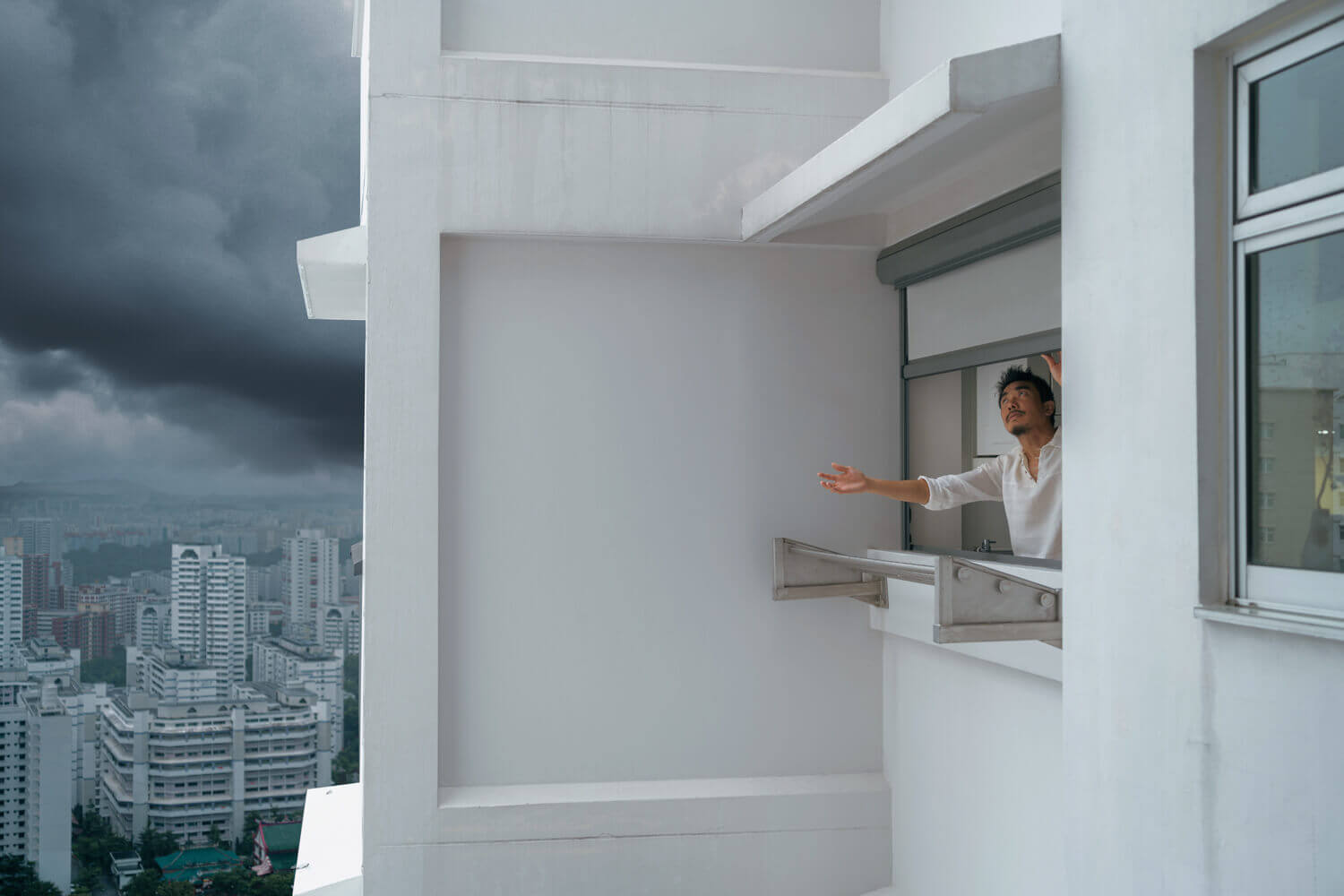
HDB flats: what you need to know
Are Ziptrak® / zip blinds allowed in HDB flats?
Yes. HDB permits the installation of retractable outdoor blinds on balconies and service yards. Zip blinds, including track-guided systems like Ziptrak®, fall within this category.
Do you need HDB approval?
For standard retractable blind installations, you generally do not need to apply for HDB approval provided you follow these conditions:
- The blind is retractable (not fixed or permanent)
- It is installed within the balcony boundary and does not protrude beyond the building facade
- It does not obstruct emergency exits or fireman’s access points
- It does not affect the structural elements of the building (e.g. hacking is not permitted)
If there is any uncertainty, it is safer to verify the specific HDB position before proceeding, rather than assuming every retractable blind is automatically exempt.
What is not permitted in HDB flats
- Permanent fixed panels or solid enclosures
- Any installation that requires hacking of walls or structural elements
- Blinds that extend beyond the balcony edge or obstruct common areas
- Installations that cover or block windows designated as escape routes
Checklist for HDB flat owners
☐ Confirm the blind is fully retractable
☐ Check that installation does not require hacking or structural work
☐ Confirm with your installer that fireman’s access is not obstructed
☐ Ensure the blind sits within the balcony boundary
☐ Check that the installer uses appropriate fixings for your wall type (concrete preferred over decking)
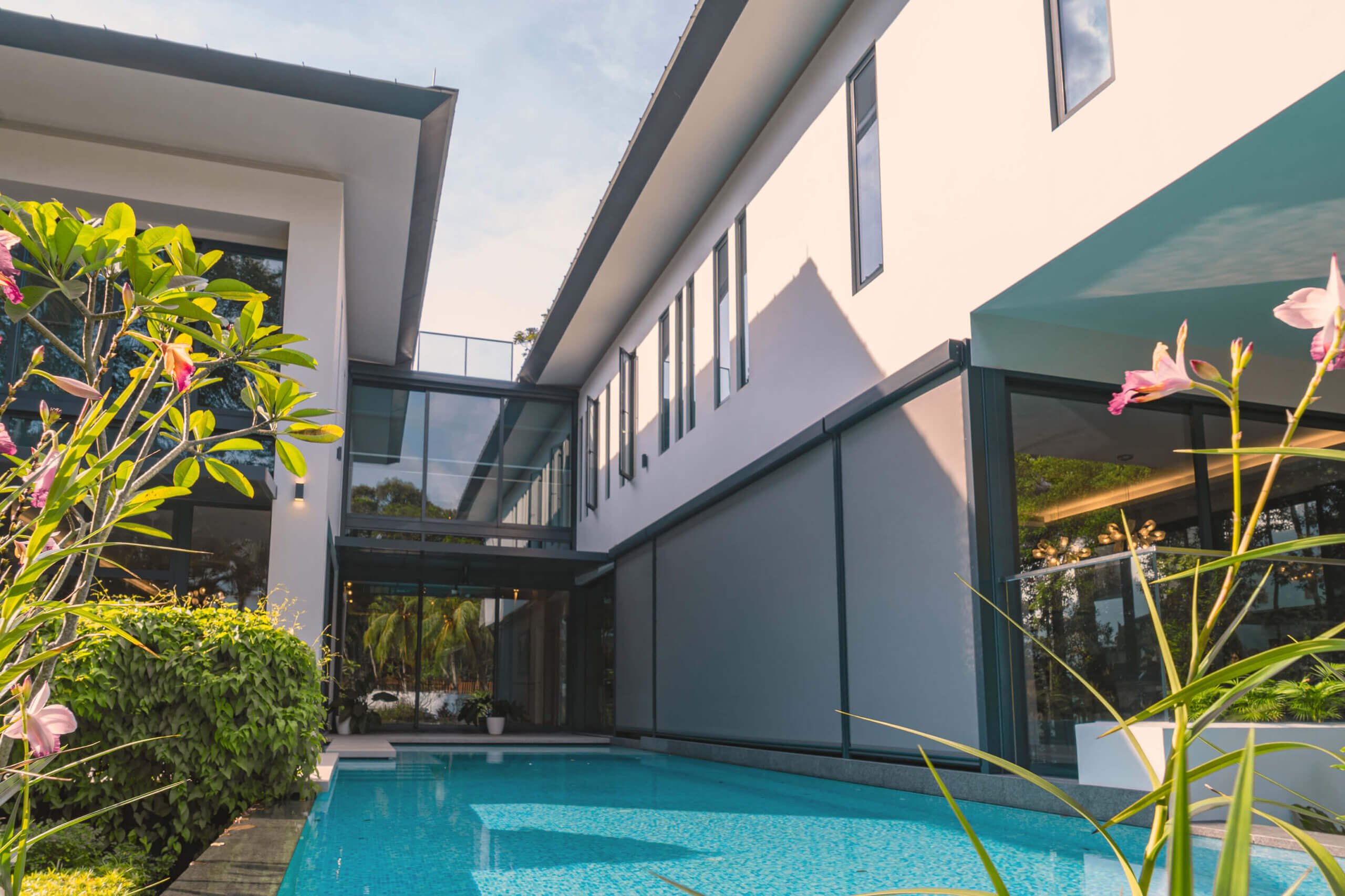
Ziptrak® installation rules in Landed properties
Landed homeowners generally have the most flexibility, but the installation should still stay within the property boundary and should not create a permanent enclosure. There is usually no MCST, but planning and boundary considerations can still matter.
The main considerations for landed properties are:
- Structural surface: Zip blinds can be mounted to wood, steel, brick, or concrete. If mounting to a pergola or canopy, confirm it is structurally sound enough to bear the load.
- Boundary lines: Ensure the installation does not extend beyond your property boundary.
- Retractable awnings: Zip blinds cannot be mounted directly onto a retractable awning. A fixed steel frame would need to be installed first as an independent mounting point.
Ziptrak® vs other zip blind brands: does it matter for compliance?
The compliance question is about the type of system and the installation outcome, not the brand name. A fully retractable track-guided system is generally treated more favourably than a fixed enclosure, regardless of whether it is branded Ziptrak®, Zipscreen™, ZipBlind®, or another system.
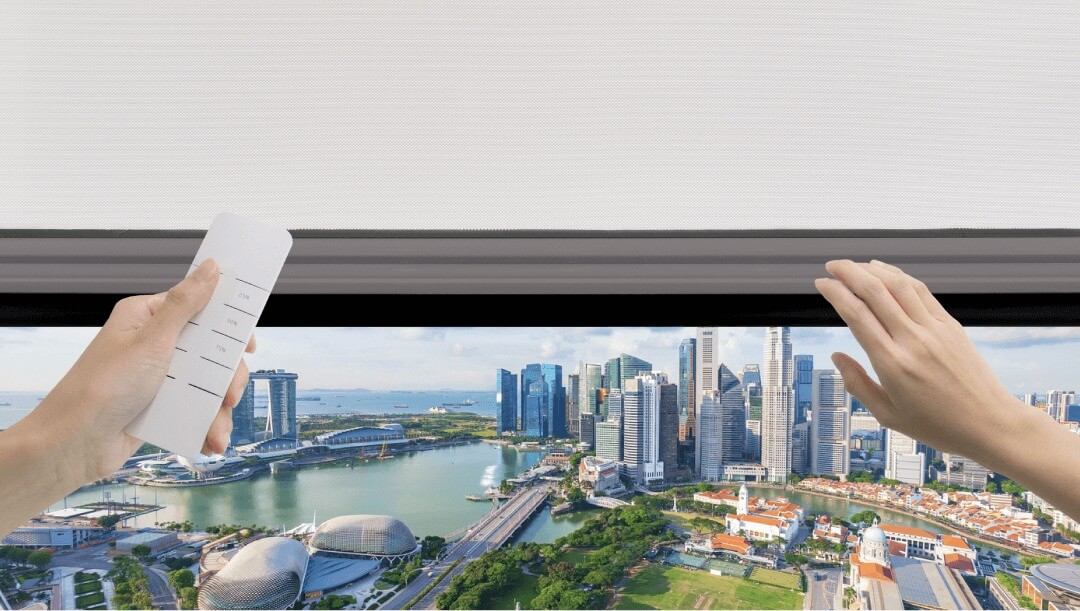
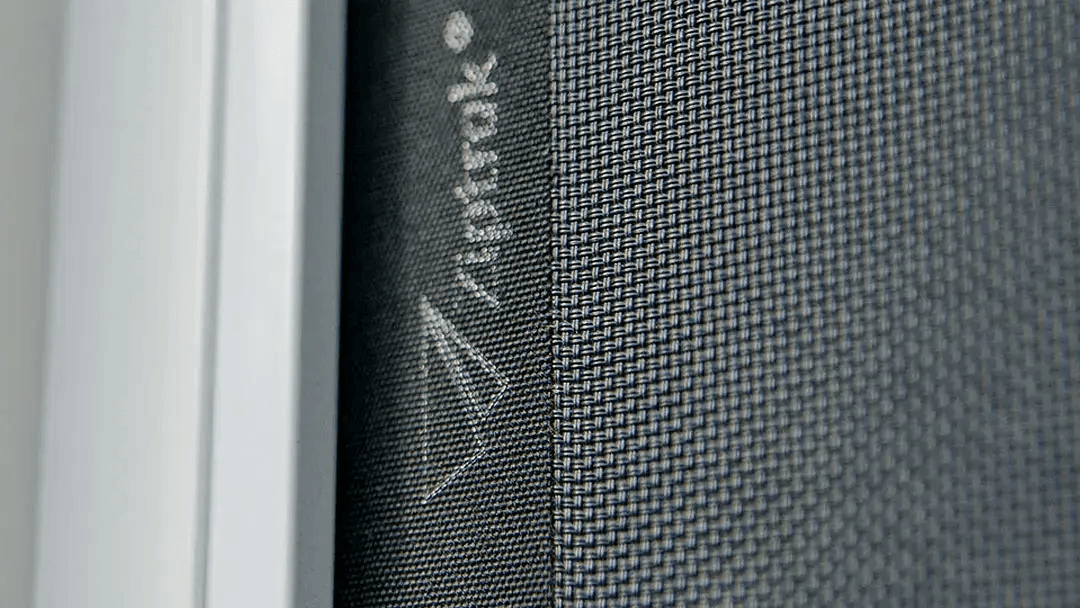
Where brand does matter is quality and longevity. Ziptrak® is the original patented track-guided system from Australia, with the fabric welded directly to the side spline using a high-frequency process that covers 23mm of fabric on both sides. This gives it significantly better wind resistance than systems that use a looser spline method, an important consideration for high-rise units in Singapore.
For MCST submissions, using a well-known brand with clear product documentation (like Ziptrak®) can also make approvals smoother, as MCSTs are more familiar with established products.
High-rise considerations (above 20th floor)
Wind speeds increase significantly at higher floors. Units above the 20th floor typically experience wind loads 20–40% higher than ground-level units. For high-rise installations, pay attention to:
- Wind load rating: Ziptrak® blinds have been tested by TÜV SÜD PSB in Singapore to withstand static wind loads equivalent to 260km/h. Always ask for wind load test data when comparing products.
- Motor obstacle detection: Motorised blinds at high floors that have obstacle detection, may stop the motor if wind pressure builds up against the fabric. Although this protects the motor, some homeowners may feel inconvenienced by the inability to move the blinds when in need.
Fabric openness factor : what it means and how it affects compliance
One of the most common questions homeowners ask when choosing a zip blind fabric is: “does the openness of the fabric affect whether my installation is allowed?”
The short answer is yes, fabric openness can affect whether you are permitted to install a zip blind. Fabric choice can also affect MCST approval, appearance, and practical weather performance. Here is what you need to know.
What is the openness factor?
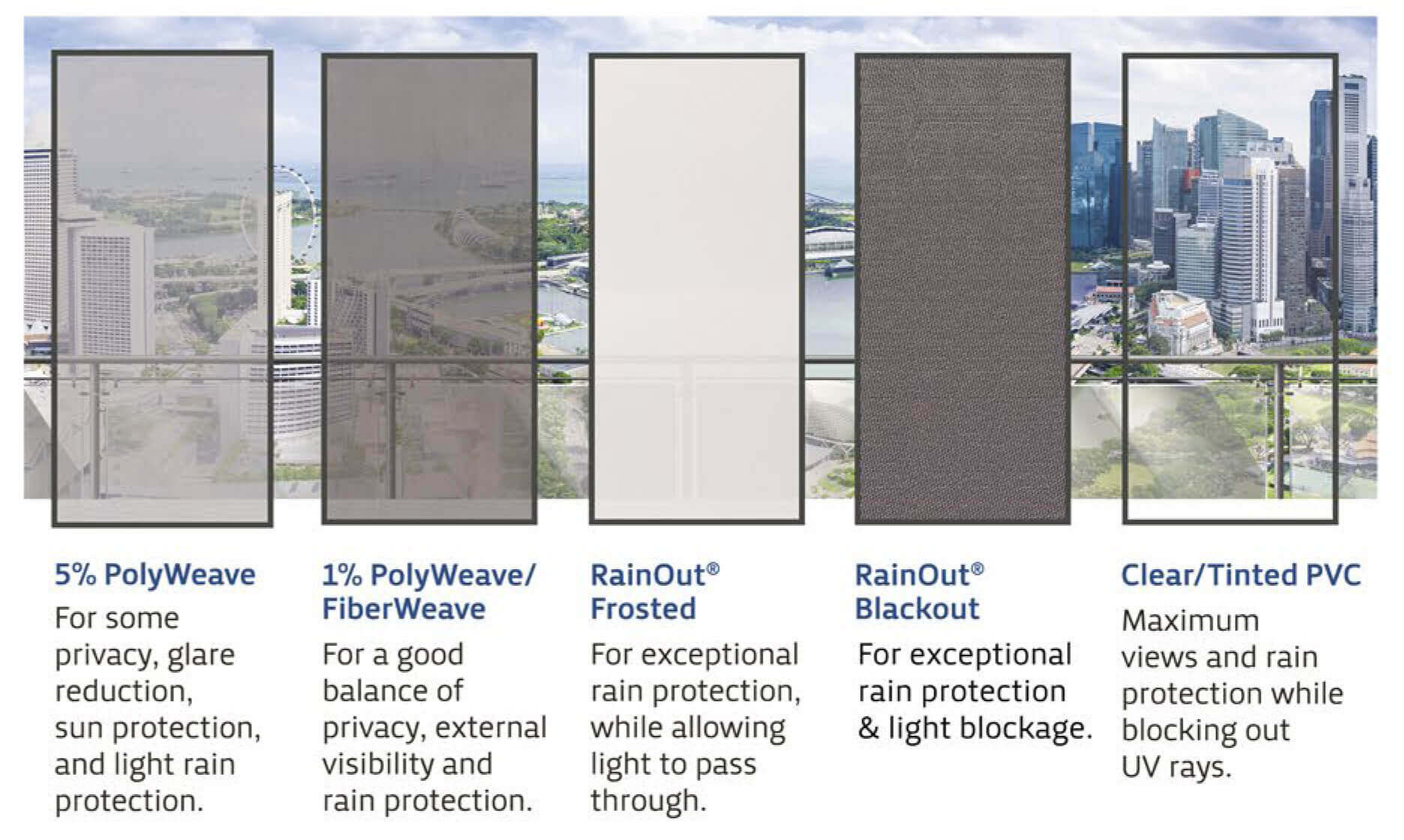
The openness factor refers to how much of a fabric’s surface area is open – essentially, how tightly or loosely it is woven. A fabric with 0% openness has no gaps at all (fully solid, like ClearView® PVC, RainOut® Blackout and Frosted). A fabric with 5% openness means 5% of the surface area is perforated, allowing air, light, and some moisture to pass through.
For zip blinds in Singapore, the most common options are:
| Openness factor | What it means in practice |
|---|---|
| 0% (non-porous, e.g. ClearView® PVC, Rainout®) | Fully solid – no air or water passes through. Maximum rain, UV, and insulation performance. |
| 1% | Very tight weave – blocks up to 99% of wind, rain, and UV. Near-solid appearance from outside. Most popular choice for Singapore condos. |
| 5% | More open weave – good light and ventilation, muted view through fabric. Less effective against driving rain. |
Does fabric openness affect URA compliance?
URA’s rules states that balcony screens need to allow for natural ventilation/air flow within the balcony at all times, even when the screens are fully drawn closed. URA generally treats balcony blinds as furnishing and does not require planning permission for blinds. However, balconies must remain semi-outdoor, and any screen-like installation should not fully enclose the balcony or block natural ventilation. Condo owners should also check MCST guidelines before installation as some MCSTs may scrutinise this more closely. Choosing a fabric with even a small openness factor (1%) signals that the space is still semi-outdoor in character, which tends to make MCST approvals smoother.
How fabric openness affects MCST condo approvals
This is where fabric choice becomes genuinely important from a compliance standpoint. Many condos specify permitted fabric types in their house rules, often referencing openness factor directly. Common requirements include:
- A specified openness factor range, typically 1% to 5%, to maintain facade uniformity and the building’s semi-outdoor aesthetic
- A particular colour family (grey, charcoal, or beige tones are most commonly approved)
- No fully mirrored or highly reflective fabrics
If your condo specifies “1% to 5% openness,” installing a 0% solid PVC fabric may be rejected – not only because of URA, but also because of the MCST’s own aesthetic rules. Always confirm the approved fabric specification with your Managing Agent before selecting your fabric.
The 0% openness question
ClearView® and similar clear PVC fabrics are 0% openness, fully solid and transparent. They offer the best rain protection and are excellent for retaining cool air, making them popular for restaurant and commercial installations.
For residential use in condos, many MCSTs do not approve clear PVC for balcony-facing blinds because the appearance from outside is more akin to glazing than a soft screen, which conflicts with the semi-outdoor look they want to maintain. Before choosing clear PVC for a condo, confirm explicitly with your Managing Agent.
A practical warning: the “greenhouse effect” with low-openness fabrics
One frequently overlooked issue with 0% or very low openness fabrics in Singapore’s climate: if a fully solid blind is closed while the balcony gets direct afternoon sun, heat can build up between the blind and your sliding glass door. This trapped heat raises the surface temperature of the glass significantly and, over time, can cause thermal stress – particularly in older or thinner glass panels.
For balconies that receive prolonged direct afternoon sun, a 1–5% openness fabric is often a better practical choice than fully solid PVC. The small perforations allow minimal heat exchange that prevents this greenhouse buildup, while still providing strong rain and UV protection.
Openness factor quick reference
Choose 1% if:
- You want near-solid weather protection with a fabric appearance
- Your balcony is a condo-facing facade (most likely to be approved)
- Rain protection is the primary goal and privacy matters
Choose 5% if:
- Airflow and view are priorities over rain protection
- You are on a lower floor with some shelter from above
- Your condo specifies 5% as the approved standard
Choose 0% if:
- Your property specifically permits it (case-by-case for private property)
- Maximum rain exclusion and air-conditioning containment is the priority
Quick decision guide: which rules apply to you?
I live in an HDB flat
→ Focus on whether the blind is retractable, stays within the balcony boundary, and does not alter the building structure or facade.
I live in a Condo
→ Check your house rules first. If prior approval is required, submit to MCST before booking installation. Wait for written approval
I live in a landed property
→ Ensure the system is retractable and mounted within your property boundary, and confirm the supporting structure is sound.
I’m not sure which applies to me
→ Contact your Managing Agent (for condos) or check your property type on MyHDBPage or URA SPACE.
Next steps
If you are ready to explore Ziptrak® blinds for your balcony, The Curtain Boutique offers friendly obligation-free consultations for Ziptrak®, curtains, window blinds, outdoor pergolas, roofing and iGlass. We are a pioneering authorised Ziptrak® retailer and regularly assist homeowners with MCST documentation and compliance questions.
Our professional and experienced in-house experts install in all property types: HDB flats, condominiums, landed properties, and commercial spaces island-wide.
Get a Free Quote | Visit Our Showroom | Browse Ziptrak® Options
Information in this guide is accurate at time of writing. Regulations may be updated; always verify with your Managing Agent or the relevant authority before proceeding.