
Choosing the right outdoor blind system in Singapore is often the final hurdle in turning a balcony from a storage space for dead plants into a legitimate extension of your living room.
If you have settled on Ziptrak®, you have already made a solid choice. As the original Australian track-guided system, tested locally by TUV SUD PSB to withstand wind loads of up to 260km/h, it is the gold standard for keeping out rain, dust, and those persistent tropical mosquitoes.
The big fork in the road remains: Manual or Motorised?
This decision is not just about your willingness to manually adjust the blinds several times a day. It is a technical choice that impacts your balcony layout, your 2026 renovation budget, and the longevity of the system itself. Let us dive deep into the mechanics, the lifestyle implications, and the cold, hard facts involved in both options.
Manual Ziptrak®: SuperSpring® Advantage
The manual Ziptrak® system is frequently misunderstood. Many homeowners envision heavy roller blinds that require a workout to operate. Ziptrak® is different because of its patented SuperSpring® system.
The weight of the fabric is counterbalanced by a heavy-duty spring hidden inside the top tube. This allows the blind to be weightless, meaning you can glide it up or down with a single hand and leave it at any height without it crashing down or springing up. This is a major differentiator from cheap “zip-style” imitations that require locking pins at specific intervals.
Key Features
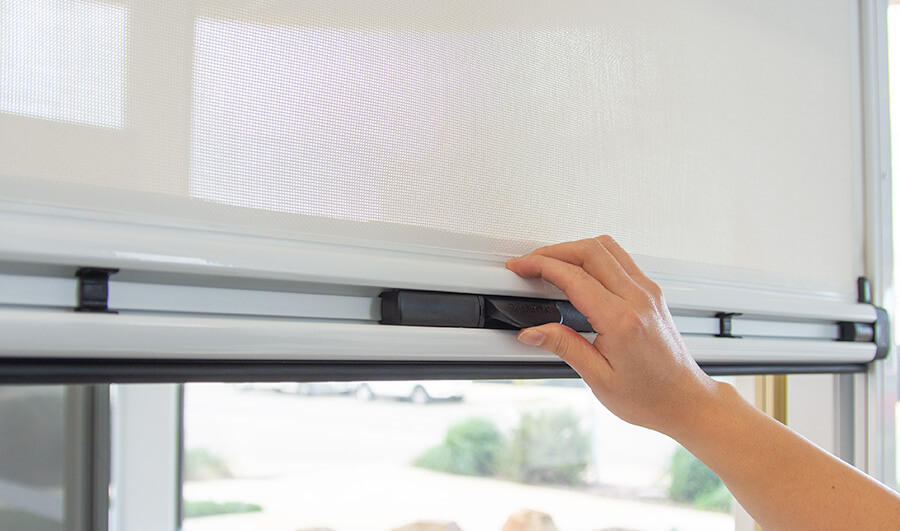
- Centre-Lock-Release: Manual blinds come with a unique bottom-bar locking mechanism. When fully lowered, the blind clicks into place to stay secure during high winds. To open it, you simply lift the center handle, and both side locks release simultaneously.
- Low maintenance and cost-effective: Ziptrak® offers a cost-effective and low-maintenance outdoor solution that operates entirely without electricity, utilising a manual spring-balanced system to ensure effortless operation and long-term durability.
- Speed: Manual operation is instant. In the event of a sudden Sumatra squall, you can seal your balcony in seconds.
The Trade-offs
- Reach Requirements: You must operate the blind from the center of the bottom bar to ensure it rolls evenly. If your balcony layout has a large sofa or dining table blocking the middle, you will find yourself overstretching. This can lead to uneven rolling, also known as telescoping.
The Pull Stick Factor: For very high installations, you will need a pull stick. While effective, it adds one more item to store on your balcony.
Motorised Ziptrak®: Smart Home Integration
Motorised blinds are the “set it and forget it” solution. In the current 2026 market, they have become the standard for high-end condo renovations and smart home enthusiasts.
Official Ziptrak® systems in Singapore typically use Somfy or Dooya motors. These are housed inside the top tube and require a 13A power point. This should be planned early in your renovation to avoid messy external trunking.
Key Features
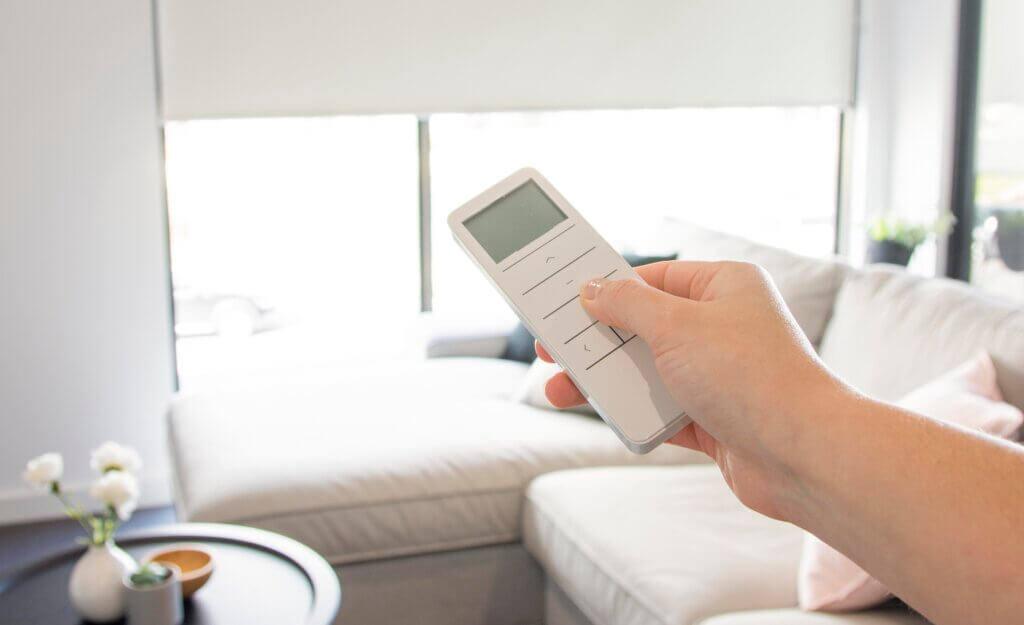
Convenience and Automation: Motorised Ziptrak® makes everyday use easier, allowing the blinds to be adjusted at the touch of a button for added convenience and smoother control.
- Smart Home Integration: These systems can connect with compatible smart home platforms such as Google Home, Alexa, or mobile apps, allowing you to operate the blinds through your phone or voice control. You can also set schedules for the blinds to adjust automatically throughout the day.
Obstacle Detection: High-quality motors include a safety sensor. If the blind hits a stray chair, a child’s toy or a pet while descending, it stops immediately. This prevents damage to the fabric and the motor.
The Trade-offs
Minimum Width: Because the motor itself takes up physical space inside the tube, motorised blinds require a minimum width of 800mm.
No Manual Override: Standard motorised blinds cannot be moved by hand. If there is a power outage, the blinds stay in their current position.
The Wait: Motors move at a steady, cautious pace. It usually takes roughly 20 to 30 seconds for a full cycle. This is a safety feature to ensure the fabric stays perfectly aligned.
Comparison Breakdown
| Feature | Manual Ziptrak® | Motorised Ziptrak® |
| Min/Max Width | 450mm to 6000mm | 800mm to 6000mm |
| Max Height | Up to 4.7m | Up to 6.0m |
| Locking System | Centre-Lock-Release | Motor-held tension |
| Operation Speed | Instant | 20 to 30 Seconds |
| Smart Home Ready | No | Yes |
Maintenance
Regardless of the drive system, Ziptrak® requires specific maintenance to survive the humidity of Singapore.
Monthly: Wipe the side tracks with a damp cloth to remove grit and urban soot. This prevents the “clicking” sound often heard in poorly maintained tracks.
Quarterly: Use a soft-brush vacuum on the mesh fabric to prevent dust buildup. This is especially important for to keep the “pores” of the fabric clear.
Annually: Apply a non-oil-based silicone spray to the internal tracks. The WD-40 Specialist High Performance Silicone is a recommended option.
Crucial Warning: Never use standard WD-40 or oil-based lubricants. These attract dust and create a sludge that will eventually jam the spline in the track. Doing so will likely void your manufacturer warranty.
The “Best of Both Worlds” Alternative: DualDrive®
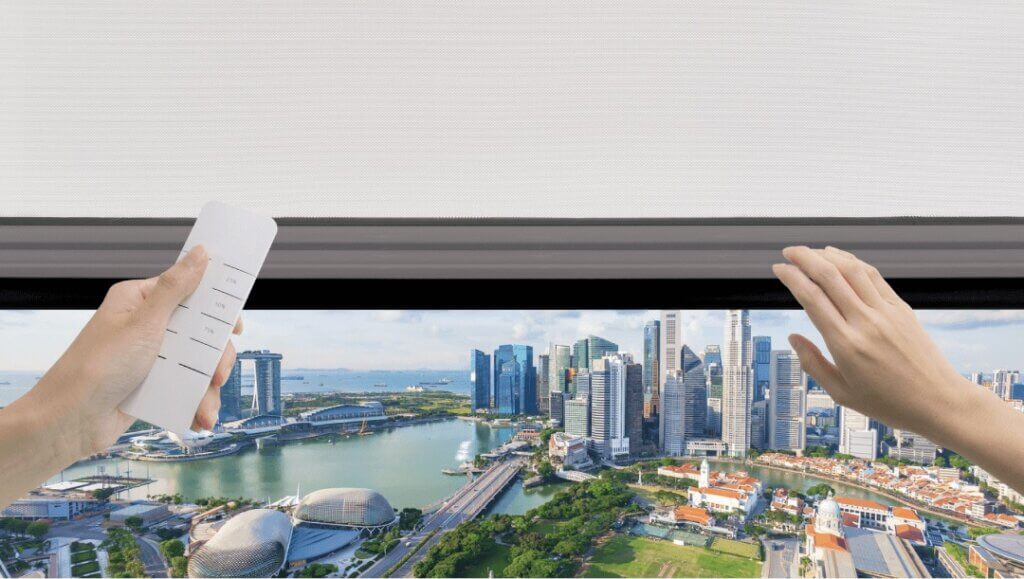
If you are genuinely torn, there is a third option: Ziptrak DualDrive®. This system allows for both motorised convenience and manual operation in one unit. It is ideal for homeowners who want the luxury of automation but need the safety net of manual operation during power outages. It also allows you to bypass the motor when you simply want to open the blinds quickly to let in a breeze.
How to Choose: The Final Checklist
Choose Manual If:
Reliable and durable: With fewer mechanical components, manual systems require less maintenance and typically last longer than motorised options. Manual systems also comes with a 10-year warranty on SuperSpring®, while motorised systems are covered for 5 years on hardware components. T&Cs apply.
You Want Speed: You prefer to flick the blinds up the second the rain stops.
Low Frequency: You only plan to use the blinds during heavy rain or for occasional laundry drying.
Choose Motorised If:
Accessibility is an Issue: Your balcony has furniture, such as a long outdoor bar, that prevents you from reaching the center of the blind.
The Wow Factor: You want to increase the resale value of your property with a smart home ready balcony.
Wide Spans: You are installing a system over 4 meters wide. These can be physically taxing to lift manually over long periods.
Daily Use: You plan to use the balcony as a WFH office or daily dining area where fine-tuned control over light and heat is essential.
Conclusion
In the Singapore market, the better choice is not simply manual or motorised. It depends on how you want to use your outdoor space every day.
If you value speed, control, and smart home convenience, motorised Ziptrak® offers effortless operation at the touch of a button. If you prefer a simpler, faster, and mechanically reliable system, manual Ziptrak® with the SuperSpring® system remains one of the most dependable outdoor blind mechanisms available.
But for homeowners who do not want to compromise, Ziptrak® DualDrive offers the strongest middle ground. It gives you the convenience of motorised operation when you want it, and the practicality of manual control when you need it. For many Singapore homes, that flexibility is what makes the system truly future-ready.
Ultimately, the right Ziptrak® system should not only look good on day one. It should match your habits, your space, and the way you actually live.
Book an appointment at our showroom to experience the different Ziptrak® systems and find the right fit for your home.