
Living in Singapore means getting used to a certain amount of background noise. Traffic, MRT trains, construction works and activity from surrounding developments can all become part of daily life, and for homes with balconies the large opening can make that noise feel even more noticeable.
So, can outdoor blinds actually help?
Yes – acoustic fabrics like Ziptrak® RainOut® Acoustic can help reduce outside noise on your balcony, but they should not be mistaken for full soundproofing. Beyond weather protection, RainOut® Acoustic has been independently tested for acoustic performance, making it worth considering if you want a quieter and more sheltered balcony.
This guide explains what RainOut® Acoustic is, how it performs, and when it may or may not be suitable for your home.
What Is Ziptrak® RainOut® Acoustic Fabric?
RainOut® Acoustic is a specialised fabric option for the Ziptrak® track-guided blind system.
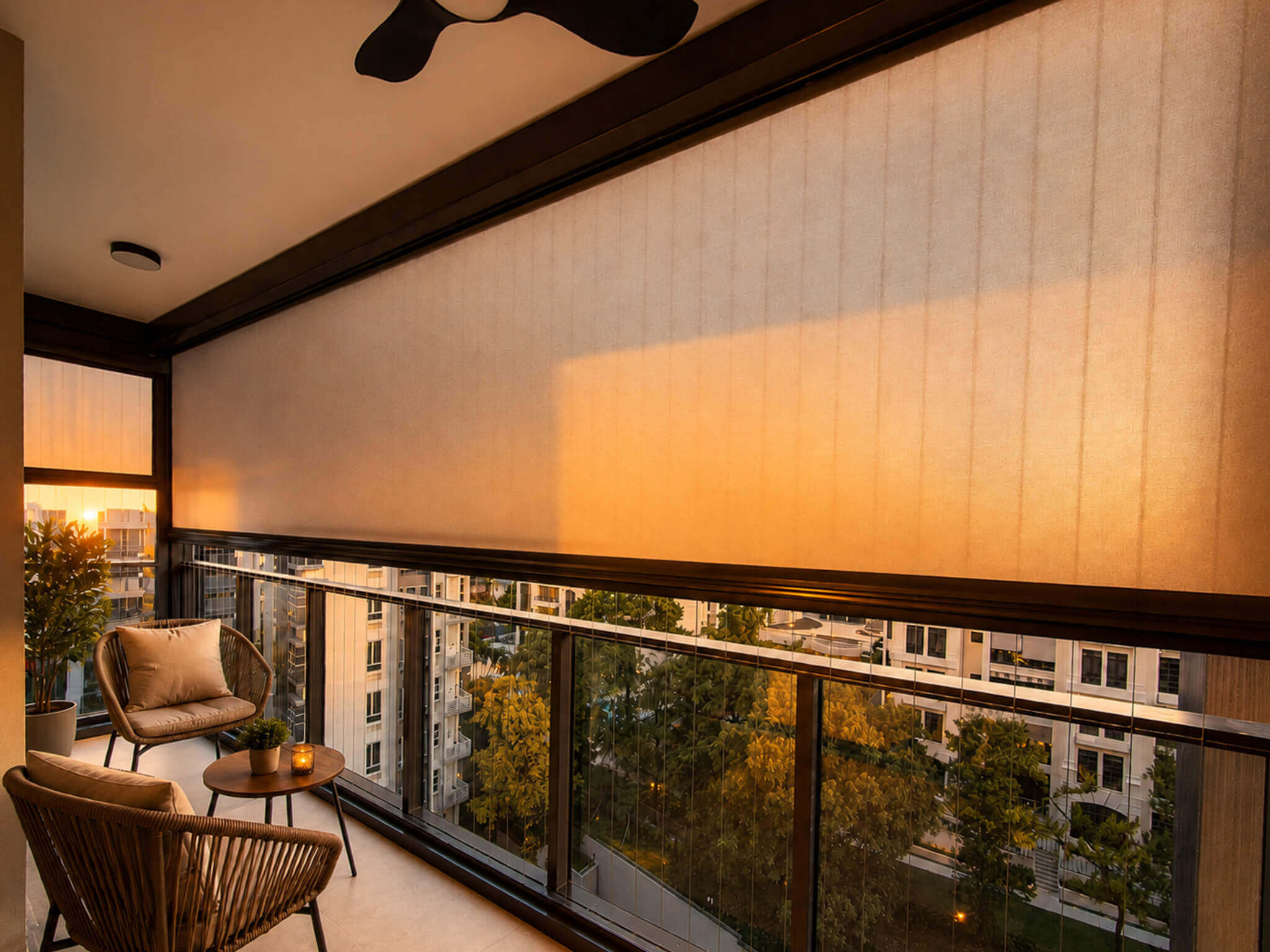
Unlike conventional outdoor mesh, which generally prioritises ventilation and outward visibility, RainOut® Acoustic is designed to create a more enclosed environment. The fibreglass-based fabric is waterproof while still allowing diffused natural light through, and is designed to offer greater privacy while reducing external noise.
This makes it particularly relevant for balconies where exposure to noise and rain are bigger concerns than maintaining maximum airflow or a completely clear view. That distinction is important because there is no single Ziptrak® fabric that suits every home. Each fabric offers a different balance of:
- View
- Ventilation
- Weather protection
- Privacy
- Light control
- Noise reduction
If you are still deciding which matters most for your balcony, our guide to comparing the different Ziptrak® fabric options takes a closer look at the choices available and how they differ.
How Much Noise Can RainOut® Acoustic Reduce?
According to acoustic testing cited by Ziptrak® Singapore, RainOut® Acoustic achieved an average ambient noise reduction of about 11.9 dB and a Sound Transmission Class (STC) rating of 12 in tests conducted by TÜV SÜD PSB. These figures show measurable noise reduction, but the effect in a real balcony still depends on your layout, openings and how close you are to the noise source.
A home directly beside an MRT track presents a very different acoustic environment from one experiencing occasional road noise several floors below. It is therefore more accurate to think of RainOut® Acoustic as a way to reduce external noise entering the space, rather than eliminate it completely.
Are Acoustic Blinds the Same as Soundproof Blinds?
No. Soundproofing usually requires multiple parts of a space to work together, including walls, windows, doors, seals and other openings. In practical terms, soundproofing means designing the whole envelope of the room so very little sound can pass through.
An outdoor blind cannot turn an open balcony into a soundproof room. What an acoustic blind can do is introduce another barrier between the noise source and your home. This can be useful for homeowners who spend a significant amount of time on the balcony or want to reduce some of the ambient noise reaching the adjoining living space.
For more demanding acoustic requirements, such as home studios or rooms beside high-intensity noise sources, other sound-control measures may still be necessary.
Why Does the Ziptrak® System Matter?
The fabric is only one part of an outdoor blind.
A genuine Ziptrak® uses a track-guided design that holds the sides of the blind within vertical tracks instead of allowing the material to hang freely. This helps minimise the open side gaps found on conventional free-hanging outdoor blinds. For weather protection, this helps reduce the amount of wind-driven rain entering from the sides.
The same principle is relevant when considering noise. An acoustic fabric can perform more effectively as a barrier when it covers the balcony opening more continuously. When RainOut® Acoustic is combined with Ziptrak®’s track-guided system, it can help reduce both gaps and sound paths compared to an open fabric on a free-hanging blind. This does not make the installation airtight or soundproof, but it is one reason the overall blind system matters alongside the fabric itself.
What Is RainOut® Acoustic Like in Everyday Use?
Noise reduction may be one of its defining characteristics, but choosing RainOut® Acoustic also changes how your balcony looks and feels.
Key characteristics include:
- Low openness factor – the fabric has a very tight structure with a coating, creating a more enclosed feel than open-weave mesh.
- Diffused daylight – natural light still passes through, but becomes softer and more diffused, giving a frosted effect.
- Higher privacy – the tighter fabric structure provides greater visual privacy from outside, especially during the day.
- More sheltered feel – the balcony feels more enclosed and protected from wind-driven rain and general exposure.
For balconies facing another residential block, common walkway or nearby development, that additional privacy can make the space more comfortable to use.
There is, however, a trade-off. Because RainOut® Acoustic is considerably more enclosed than an open-weave fabric, you will not get the same outward visibility or natural airflow. If enjoying a clear view and keeping the balcony naturally ventilated are your highest priorities, another Ziptrak® fabric may be better suited to your needs.
Does RainOut® Acoustic Help With Rain?
Yes – RainOut® Acoustic is designed as a waterproof outdoor fabric, meaning water does not pass directly through the material in the same way it can through an open-weave mesh. Combined with Ziptrak®’s track-guided system, this can create a more sheltered balcony during wet weather and help reduce rain entering from the front and sides.
However, it is important to distinguish between waterproof fabric and a completely waterproof balcony. Outdoor blinds do not permanently seal the space. Water can still enter through surrounding openings, underneath the system or from other parts of the balcony during strong wind-driven rain. Your balcony layout, drainage and installation conditions will therefore still play a part in overall weather protection.
Does RainOut® Acoustic Block Natural Light?
RainOut® Acoustic filters natural light rather than completely blocking it.
Daylight can still pass through the fabric, but becomes softer and more diffused. This can suit balconies used as reading corners, dining spaces or extensions of the living area, where homeowners may want more shelter and privacy without making the space feel completely closed in.
The trade-off is that the outward view through the lowered blind is more obscured.
- If your priority is maintaining maximum visibility through your blinds, an open-weave fabric may be more appropriate.
- If you prioritise privacy, rain protection and acoustic performance, RainOut® Acoustic becomes more relevant.
This is why fabric selection should be based on how you intend to use the balcony rather than on one feature alone.
Who Might Benefit Most From RainOut® Acoustic?
RainOut® Acoustic is worth considering when outside noise is one of the main factors affecting how comfortably you use your balcony. This may include homes facing:
- Busy roads or expressways
- MRT or railway lines
- Construction areas
- Schools or playgrounds
- Busy communal or recreational spaces
It can also make sense for balconies used as:
- Home offices
- Dining spaces
- Workout areas
- Extensions of the living room or bedroom
In these cases, creating a more controlled environment is often more important than keeping the space fully open.
On the other hand, a homeowner with a quiet and breezy balcony overlooking an open view may place considerably more importance on airflow and visibility.
In short, RainOut® Acoustic is a good fit when noise, privacy and rain are the main issues on your balcony, and less so when breeze and an open view matter most.
Neither choice is inherently better. They simply address different priorities.
What Should You Consider Before Choosing RainOut® Acoustic?
Before choosing any Ziptrak® fabric, start with the conditions of your balcony and what you want to improve.
Noise exposure
Think about where the noise comes from, how frequent it is and when it tends to affect you most. Continuous road noise is different from occasional construction or activity from a nearby pool deck.
Your view
RainOut® Acoustic provides greater privacy, but this also means the outward view through the lowered blind will be more obscured.
Natural ventilation
Because it is a more enclosed fabric, natural airflow will be lower than with an open-weave mesh. Consider how often you rely on the balcony for breeze.
Rain exposure
For balconies regularly affected by wind-driven rain, its waterproof construction may be particularly useful.
How you use the space
A balcony used mainly for enjoying the view may have very different requirements from one that has effectively become an extra dining, working or relaxation area.
There is no universal “best” fabric. The right option is the one that strikes the most suitable balance for your home.
What About Fabric and Colour Restrictions for Condominiums?
For condominium homeowners, personal preference may not be the only consideration. Some Management Corporation Strata Titles (MCSTs) have guidelines governing balcony installations to maintain a consistent external appearance across the development. These can include requirements for:
- The blind system type
- Approved fabric colours
- Visible finishes and profiles
This means the fabric or colour you prefer may need to comply with your condominium’s approved specifications before installation proceeds. Requirements differ between developments, so it is worth checking early rather than finalising your selection first and discovering that changes are required later.
You can read our guide on MCST approval for balcony blinds, including colour and fabric considerations for a clearer idea of what condominium homeowners should check before confirming their Ziptrak® installation.
Can RainOut® Acoustic Make a Balcony More Comfortable?
For the right household, yes. The appeal of RainOut® Acoustic is not that it is automatically better than every other Ziptrak® fabric. Its strength lies in a particular combination: measurable noise reduction, waterproof protection and increased privacy, while still allowing filtered daylight into the balcony.
For homes beside busy roads, transport routes or active developments, these qualities can make an exposed balcony feel more sheltered and usable.
For another homeowner, however, airflow or an uninterrupted view may matter more. That is why choosing a Ziptrak® fabric should always begin with the way you want to use your balcony.
Choosing the Right Ziptrak® Setup for Your Home
A good outdoor blind setup involves more than choosing a fabric from a sample book.
Balcony orientation, exposure to wind and rain, surrounding buildings, privacy needs, external noise and how your household uses the space should all be considered together. For condominium homes, any applicable MCST requirements should also be checked before the final colour and fabric are confirmed.
At The Curtain Boutique, our Design Consultants can help you assess these factors and explore the Ziptrak® options suited to your home.
Visit The Curtain Boutique Showroom Gallery at:
📍 33 Ubi Ave 3, Vertex, #01-01, Singapore 408868
📞 +65 6904 8813
to compare the available options in person, or book a personalised consultation with our team to discuss how RainOut® Acoustic and other Ziptrak® fabrics can work for your balcony.